

Personal • 2012-Present
Analog Magazine Design
Overview
Role(s): Lead Designer, Creator, Art Director
Ever since I was a kid, I wanted to design a magazine of my own. I grew up reading EGM, PSM, OXM, Game Informer, EDGE, NextGen and more. Those, plus WIRED, GQ and The New Yorker, gave me a love of editorial design that hasn’t left me.
So I set out to come up with a magazine and landed on Analog. With print always on the verge of death, a magazine called Analog felt like a good basis for a new brand, and an homage to a forgotten time of print games media.
My Responsibilities:
• Magazine masthead
• Magazine layout
• Promotional strategy and design
• Print strategy and design
Approach
With Analog I wanted a place to explore styles and motifs I wouldn’t normally make for IGN, GameSpot or other more traditional, safe media brands. I started with a custom typographic logo that stands out the moment you see it and speaks to the flair I wanted in the brand. Through many iterations I’ve kept to the same philosophy: heavy geometric shapes, bold colors, and even bolder typography.
Results
Room to go bold
An outlet for my most extreme visual ideas, the ones traditional media brands couldn’t take.
A masthead done right
100+ variations over 4 to 5 years, tuning every angle until the geometric mark held.
A lifelong goal, built
Editorial design I’ve chased since reading EGM as a kid, now a brand I’m asked about in interviews.
Before Analog, there was PSTB

The original PSTB Tumblr blog

The first covers for Analog’s precursor, PSTB
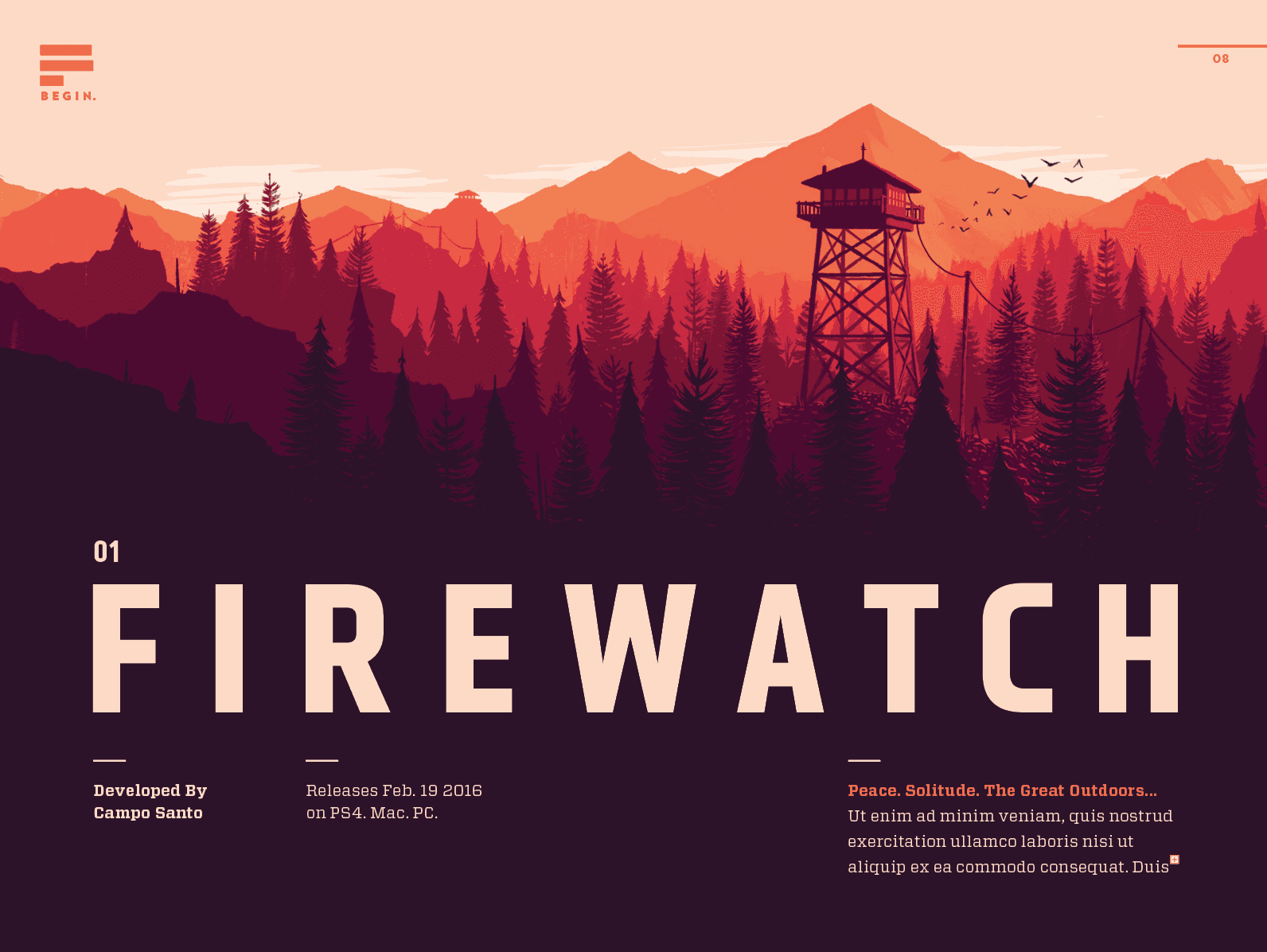
Press Start to Begin
An early spread from what would have been PSTB magazine
PSTB is where this whole thing initially even began. When I was just starting out in art school I had the idea (as many did at the time) to start a gaming and entertainment blog on Tumblr. Since I was studying graphic design I had the ability to give some branding a go and came up with the initial start of my magazine journey.
I ended up going away from PSTB as a name because it was long and taken by quite a few people already. But it made for some fun initial explorations and gave me the spark to push forward into more editorial endeavors.
Key decision
From PSTB to Analog. Other names on the list included Press Start, Select Button, Loading Screen, Analog Mag and ANLG.

Some of the alt explorations before the geometric one you see now

The original tracing and alignment of the Analog letterforms

Some variations of the geometric logo
Getting to the final logo
To say it was a short process getting here would be a massive understatement. I’ve probably been developing this logo no joke for about 4-5 years now in my off time when I can. Since this logo lives as the masthead of the magazine, I wanted to try getting it as close to perfect as I could.
Once I landed on the geometric version and started to explore the connections of the letterforms, everything started to click. Still, even with how long the process to get there was, it was well worth the effort to get there.

The “AN” sub-logo

The primary Analog masthead logo
The final two logos
The final logos as seen above are a labor of love and many hours spent tweaking the difference between a 45 degree angle and a 60. Rarely in my career have I been as proud of a final logo as I am with this one. I believe it represents a bold, eye-catching and strong mark for any publication to utilize, and I have so many ideas for how to expand it even further from here.
The sub-logo I developed from just the “AN” of Analog is something I use throughout the magazines design and as a reminder of the brand where the full logo being present isn’t as necessary.
Key decision
The “AN” sub-logo. It shows up most as page number markers and as a capstone mark at the end of designs and text.

Spread made as I played through Life Is Strange: True Colors
Life Is Strange
One of the ways i would motivate myself to make new spreads was by putting myself in the mindset of a games journalist and as i play through my favorite games of the year i would write down notes and story beats and imagery that would make for an engaging spread of a magazine.
The spread you see above is a key example of that. I always utilize my own screenshots into the piece for that more editorial touch. Putting myself through this exercise usually allows me to keep pushing myself to make new Analog spreads regularly which keeps my senses sharper and more in tune.
Key decision
Spreads written like a journalist. Each one takes working with a writer on what they want to get across, collecting assets, proofreading and spell checks, then a back and forth on how to lay out the content for a clean read.

Interior spread featuring Half-Life’s Gordon Freeman

Interior spread for Analog about Half-Life

Opening spread for an Analog story on Half-Life 2’s impact
Wake up, Mr. Freeman
Half-Life 2 is my favorite game of all time, and being such a monumental force in the industry it makes for a great subject to design for. The series has a wealth of art and ideas to riff on and i feel inspired to make designs due to that passion I have for it.
As shown, I have a strong feeling of how typography is used in a magazine and feel as if it can always be your strongest core element to make any design thrive. Throughout these Half-Life spreads and others you’ll see, typography is a key element if not THE key element in my designs

Opening spread for an Analog story on the duality of Abby and Ellie from TLOU2
Ellie and Abby
Another idea for a story on Analog that related to a play-through i was doing at the time of TLoU2. It was a game that inspired me so much creatively (while being horribly depressing) and I just felt the need to make a feature around it. Big surprise i ended up utilizing a strong typographic intro to the piece while playing to the tonality of the game’s protagonist/antagonist

Analog cover for Deathloop

Analog cover for Halo Infinite
Giant Bomb 2022
Exploring the wilder side
Like I have always said with Analog, it is an outlet for me to explore the types of designs I would normally be restricted from producing for more traditional media. These covers in particular were an example of that. I went maximalist with the approach and maintained the use of geometric shapes of the logo to work as my texture.
With both of these (and the Life is Strange example below) I feel like I was able to flex my more exploratory side of design. It speaks to the type of design i want Analog to strive to achieve now and in the future. I never want the magazine to feel like it’s caught in the past

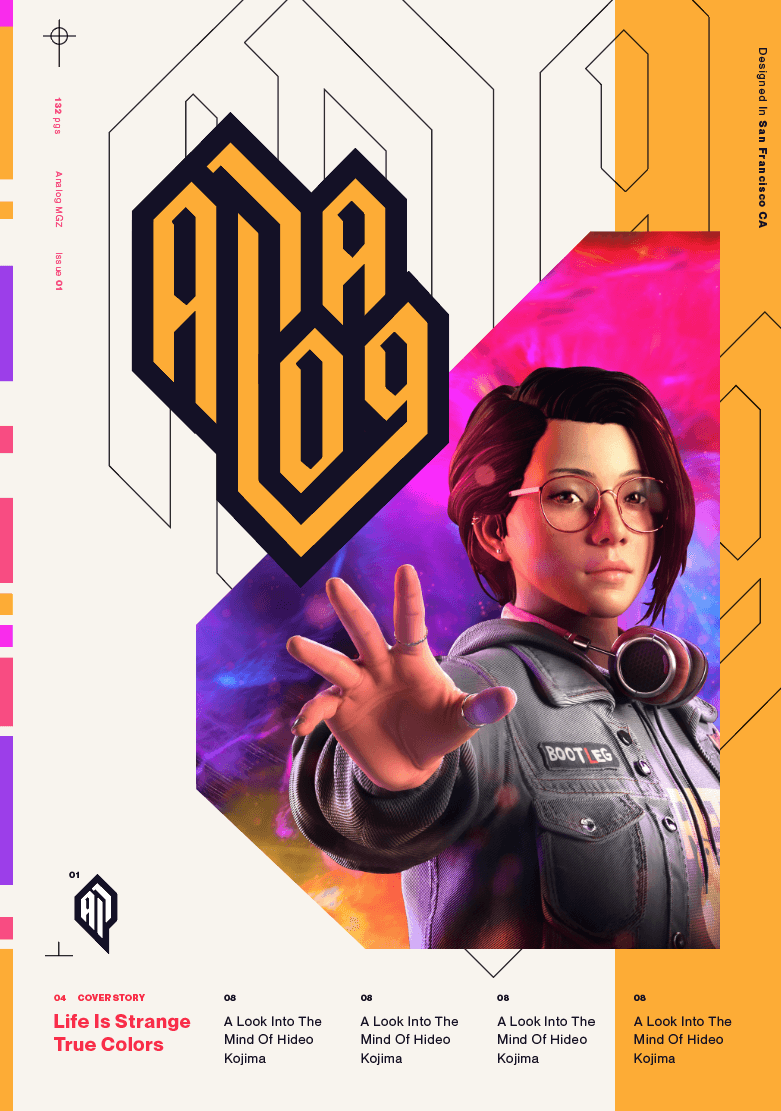

A gathering of cover options I’ve made over the years
Analog does covers
Cover designs in publication design are probably most of what drew me to this type of work in the first place. The cover of a magazine can be everything between someone's interest being sparked in the first place to pick up yours over any of the 100 other magazines that exist in this landscape
As you saw above I keep trying to push these covers forward in a way that keeps Analog fresh and exciting. I hope to continue that evolution for years to come and for the hopeful printing of a magazine in the near future

Bomber jacket for Analog staff
Staff apparel
I have always thought the idea of a bomber jacket for staff of a magazine or editorial entity would be a bold and fun way to show off the place you work for. The idea with this would be to even produce a version where the gold of the inner analog logo is made from gold foil.
As with my many projects over the years apparel usually finds a way into them and Analog was no different here
Previous project

